

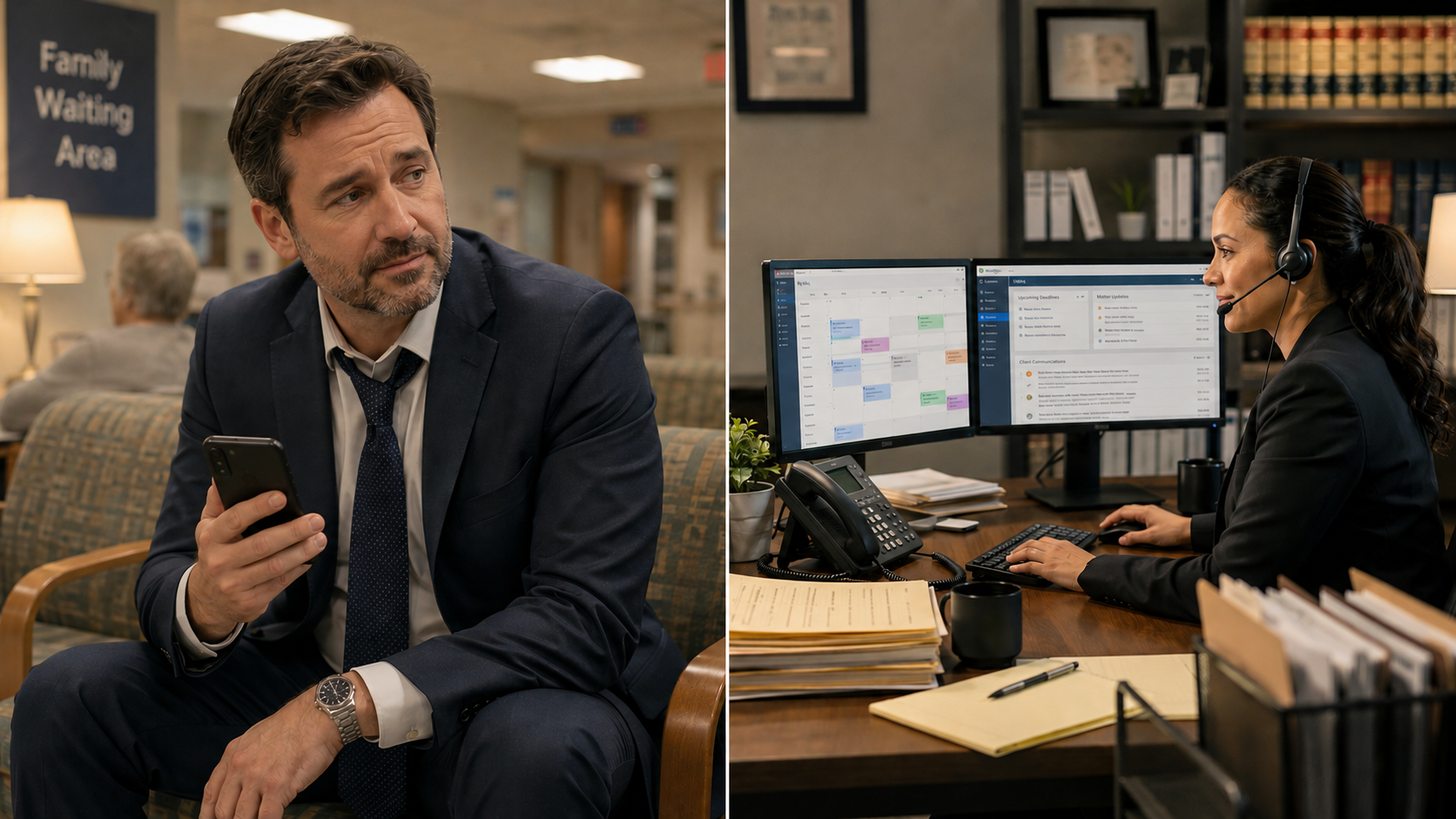
Attorneys, like other professionals, have it rough. According to the American Bar Association’s 2023 Profile of the Legal Profession, lawyers report significantly higher rates of anxiety, depression, and burnout than the general population, with solo practitioners carrying some of the highest stress loads in the profession.
A 2016 study published in the Journal of Addiction Medicine found that 28% of licensed practicing lawyers experienced depression, 19% experienced anxiety, and 23% experienced stress at problematic levels. The pace of solo practice in 2026, with its always-on client expectations, mounting caseloads, and the constant pressure of being the only person responsible for everything, has made the case for intentional rest more urgent, not less.
Taking a time off is not a luxury for you as a solo attorney. It is a professional sustainability decision. The attorneys who never take time away become more depleted, more reactive, and more prone to the kind of errors that cost them clients, bar complaints, and in extreme cases, their license. Rest is part of professional responsibility.
But knowing you need time away and actually trusting your practice to hold together while you are gone are two different things. This article covers how to build the systems, the automation, and the support structure that allow you to take a week off and come back to an organized, functioning practice rather than a backlog of fires.
Why Solo Attorneys Do Not Take Time Off and Why That Has to Change
The reasons solo attorneys give for not taking vacations are consistent and understandable. No one else can authorize a settlement. No one else can sign a pleading. No one else knows where everything is or what every client needs. The practice is built around one person, and removing that person for a week feels like pulling a structural beam from a building.
The attorney as the single point of failure
The solo practice model, by its nature, concentrates decision-making, client relationships, and operational knowledge in one person. That concentration is efficient when things are running well. It is catastrophic when the attorney gets sick, has a family emergency, or simply needs to be unreachable for a few days. A practice that cannot function for a week without its attorney is a practice that has not been built with any resilience, and building that resilience is the work that allows a vacation to be a vacation rather than a remote work trip with a better view.
The mental health case is not separate from the professional case
The Lawyer Assistance Programs run by state bars exist because attorney impairment, whether from burnout, depression, anxiety, or substance use, is a recognized professional risk with documented consequences for clients.
An attorney who is chronically depleted makes different decisions than one who is rested. They miss things. They communicate less clearly. They take longer to complete tasks that would normally be straightforward. The cost of not resting is not just personal. It is professional.
Family emergencies do not give notice
Your parent suddenly needs hospitalization, your child has a medical crisis, or a family situation requires your presence right now. Building your operational infrastructure before the emergency arrives will proove beneficial when you need that time off.
Building the systems that allow a week away is contingency planning. And it is the kind of professional responsibility that the bar associations that publish attorney wellness resources consistently encourage.
The Foundation: Building a Practice That Does Not Depend Only on You
Taking time off successfully starts months before the week itself. The systems, the documentation, the automation, and the support relationships that make an absence manageable are not things you build in the week before you leave. They are things that should already exist because they make your practice run better every day, not just when you are away.
Document how your practice actually works
The single most important infrastructure investment a solo attorney can make is a documented practice operations manual. It can be a shared document that covers how a new matter gets opened, what fields get populated in Clio, where documents get saved, how client communications get logged, what happens when a court filing is received, and who is authorized to do what in your absence.
A practice that runs on the attorney’s memory will stop when that attorney is unavailable. But a practice that runs on documented systems continues because the systems do not take vacations.
Your practice management system is the infrastructure
Your practice management system, whether that is Clio, Filevine, MyCase, PracticePanther, or another platform, is what makes a week away operationally possible. Every matter in the system with current notes, every deadline tracked and assigned, every document filed in the right place, every client communication logged to the relevant matter.
When the system is current and comprehensive, anyone with appropriate access, a paralegal, a trusted colleague covering for you, or you yourself checking in briefly from your phone, can understand the status of any matter in minutes.
If your practice management system is not current before you take time off, your absence will be managed through guesswork and memory, which is not management at all.
Identify coverage for matters that require attorney judgment
Some things that happen why you are away cannot be handled by a paralegal or an automated system. It could be the client who receives an unexpected court order needs attorney guidance, opposing counsel who makes a settlement offer needs an attorney’s response. A motion that gets filed against your client requires an attorney’s attention.
Before you leave, identify a colleague who will serve as coverage counsel for situations that require attorney judgment. It can be a peer relationship with a trusted attorney in your practice area who agrees to be reachable for genuine emergencies in exchange for reciprocal availability when they need it.
Document this arrangement, communicate it to your paralegal or support staff, and make sure the covering attorney has enough context on your active matters to respond appropriately if something requires immediate attention.
Here are other things the American Bar Association recommends:
- Obtain written consent from your clients to protect confidentiality
- Check conflicts of interest
- Assess the ability of the covering lawyer to handle matters in your field
- Let support staff know what they can and cannot do
What Your Virtual Paralegal Can Do While You Are Away
This is where a well-configured practice management system and a trusted virtual paralegal make a solo attorney’s absence manageable.
Monitoring deadlines and flagging anything urgent
Deadline surveillance is crucial when you’re away. Every matter in the system gets reviewed daily for upcoming deadlines, court dates, and response windows.
Anything that falls within the absence window gets escalated to the coverage attorney immediately. Anything that falls within the first week after the attorney’s return gets prepared so that the attorney comes back to organized, ready-to-act work rather than a scramble to catch up.
I have managed this function remotely for attorneys using Clio Manage, and the daily task view and calendar view in Clio make it straightforward to see everything that is coming without opening individual matters one at a time. A daily ten-minute review of the task dashboard and calendar is sufficient to maintain oversight of an entire active docket during a short absence.
Preparing documents for attorney review on return
One of the highest-value contributions a paralegal can make during an attorney’s absence is advancing document preparation on matters where the next step is drafting. If a motion response is due two weeks after the return date, the research can be complete and the structure of the argument can be sketched.
The attorney who returns from a week away to a set of organized, ready-to-review work products returns to productivity within hours rather than days.
Updating matter records with anything that came in during the absence
While you’re away, courts issue orders, opposing counsel sends correspondence, and clients upload documents. All of it needs to be logged to the appropriate matter record and organized before the attorney reviews it. Your paralegal should monitor the firm’s inbox, the client portal, and any court notification systems during your absence and file everything that comes in to the correct matter.
Each action should have a clear note about what it is and whether it requires attorney action, gives the returning attorney a current, organized picture of every matter rather than a raw inbox to sort through.
Automation: What the System Can Handle Without Anyone Touching It
The right practice management setup handles a significant portion of the operational workload during an absence entirely through automation, without requiring the paralegal to manually manage every function.
Automated billing reminders continue running
If your automated billing reminders are configured in Clio, they continue running during your absence. Invoices that were sent before you left continue generating payment reminders at the intervals you set. You do not need to be present for clients to receive their second or third reminder on an overdue invoice. The system handles it.
Automated intake follow-up sequences keep prospective clients warm
If you have intake automation configured in Clio Grow or a similar tool, prospective clients who submitted intake forms during your absence receive automated acknowledgments and follow-up sequences that keep them engaged until you return.
If a prospective client submits an intake form on Tuesday and receives nothing until the following Monday, they have likely moved on to another attorney. But if they receive an immediate acknowledgment, a follow-up on Thursday, and a scheduled call for Monday morning, they are still a prospective client when you return.
Court deadline reminders keep firing
The automated deadline reminders and task notifications you configured before leaving continue to fire during your absence. Your paralegal receives them, reviews them, and escalates anything that requires attention.
The automation does not replace the paralegal’s judgment about what requires escalation. It ensures that the judgment question gets raised on time rather than discovered late.
Document templates remain available for routine drafts
If your document template library is built out in Clio, your paralegal can generate routine draft documents using those templates during your absence without needing to build documents from scratch.
A routine status letter, a standard acknowledgment of received documents, a form retainer agreement for a new matter type you handle regularly, all of these can be generated from templates and queued for attorney review and signature upon return.
Before You Leave: A Practical Checklist
Because emergencies do not knock, all your active matters should be updated and current. The system needs to reflect reality before your paralegal can manage from it.
Always review notes in active matters in your practice management system and update any notes, fields, or task assignments as you go. If you had a hearing last week and the outcome is not in the system, put it in. If a client called yesterday and you made a commitment to them, log it.
Identify everything that has a deadline during or immediately after your absence. For anything due during the absence, ensure the coverage attorney knows about it and has the context to handle it. For anything due in the first week after your return, ensure your paralegal has the materials and instructions needed to have work product ready for your review.
Brief your paralegal specifically on matters that have a deliverable due in the week that you will be away. Have a matter-by-matter conversation that covers the current status, what is expected to happen during the week, what the paralegal is authorized to handle independently, and what requires escalation to the coverage attorney. This conversation is what makes the paralegal’s work during your absence purposeful rather than reactive.
Draft and schedule your client communications. Schedule a message to every client to go out sbefore your departure so clients have accurate information and do not try to reach you in the gap between when you sent it and when you actually leave.
Set your autoresponder. Make it specific. Name the coverage attorney and their contact information. Name your paralegal and specify what they can help with. Give a clear return date.
Confirm with your coverage attorney that they are ready and have enough context on your active matters to respond to a genuine emergency. A coverage arrangement that exists in theory but has not been communicated clearly is not coverage.
Coming Back: What a Returning Attorney Should Find
The test of whether your absence systems worked is what you find when you come back.
An organized inbox, not a pile
Every message that came in during your absence should be sorted, flagged by urgency, and linked to the relevant matter in your practice management system. You should be able to open your inbox and immediately understand what requires your attention today, what can wait until later in the week, and what has already been handled by your paralegal or coverage attorney.
Updated matter records
Every matter that had activity during your absence should have notes in the system reflecting what happened. A court order that came in on Wednesday. An email from opposing counsel on Thursday. A client question that was answered by your paralegal on Friday. All of it documented in the matter record so your first review after returning takes minutes rather than hours.
A prioritized action list
Your paralegal should prepare a brief written summary before you return that covers every matter, what happened during the week, what is due in the next seven days, what is waiting for your review, and what requires your immediate attention. This summary is what allows you to walk back into your practice with situational awareness rather than starting from scratch.
Draft work product ready for review
Every document that could be prepared in your absence should be in draft form waiting for your review. Your first week back should feel like finishing work rather than starting it.
The Practice That Can Survive Your Absence Is the Practice Worth Having
Solo attorneys in community forums report that the work of building systems that can handle an absence made their practice better in ways that had nothing to do with the vacation itself. The documented workflows, the configured automation, the trained paralegal support, the coverage relationships with peer attorneys, and the current practice management system are not just vacation infrastructure. They are operational resilience. They are what separates a practice that is fragile from one that can grow.
You built your practice to practice law. Not to be so indispensable to its own administration that you cannot leave it for a week. Building the systems that allow you to step back is not a retreat from the practice. It is the kind of investment in your practice that makes it sustainable for the long term.
If you are a solo or small firm attorney who wants to build the kind of practice management infrastructure that allows you to take time away without everything falling apart, schedule a free discovery call at toplegalsupport.com/contact. That is exactly the kind of operational work I do.
Related reading: What a Legal Tech Stack Should Look Like for a Solo Practice in 2026 and How to Onboard a Remote Paralegal Without Disrupting Your Practice.
Top Legal Support Services provides remote legal support to solo and small firm attorneys across California, Texas, New York, Illinois, Oregon, and more! All work is delivered under attorney supervision. Nothing on this site constitutes legal advice.